Red flags and abuse
How to recognize the warning signs of a dangerous relationship, and why they shouldn't be ignored.
Red flags and abuse
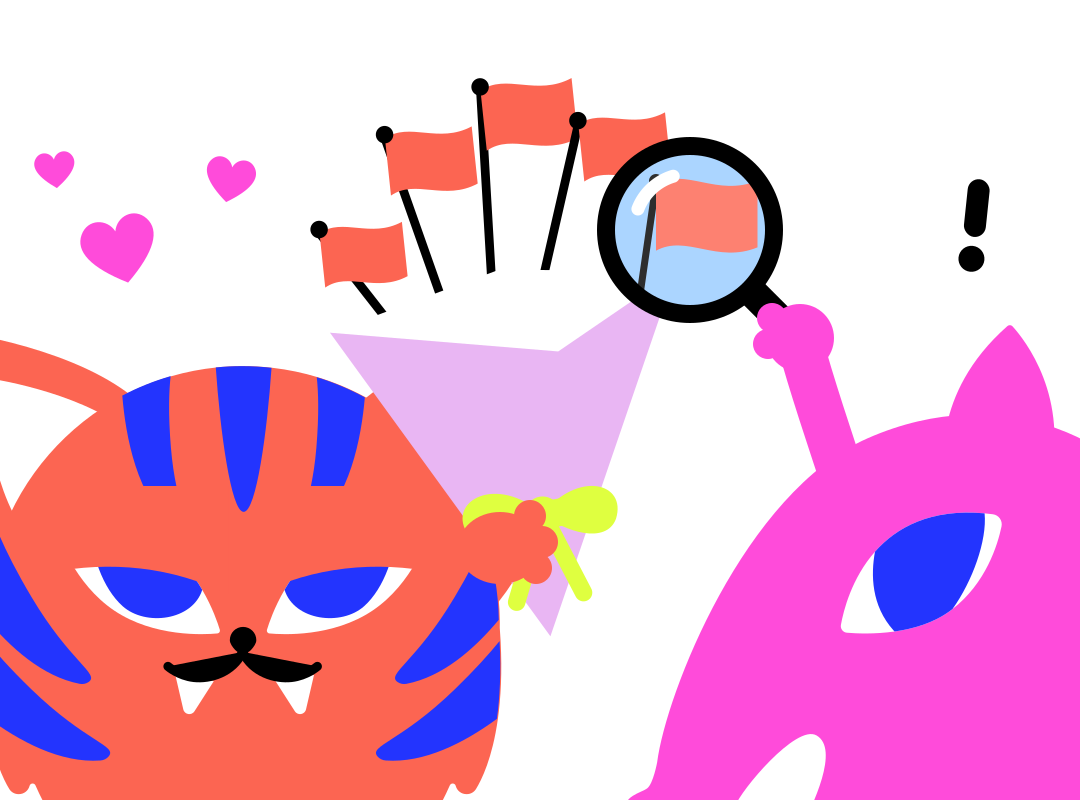
This is serious. #thisisaredflag
In the project "Careful: dangerous relationships", we look at how to recognize red flags and what to do if you notice warning signs in yourself.
Specialists from a partner psychology center helped us put into words the behaviors that can be signs of abuse. It's important not to ignore them, because they warn of potentially dangerous or toxic relationships that can cause serious physical and emotional harm.
Abuse is a complex behavioral pattern with many causes. Patterns of dangerous relationships can be passed down from generation to generation, and these are systemic processes. The question "what did I do wrong?" won't help you find the answer, because the problem lies deeper and calls for a more comprehensive approach.
Is that really a problem?
Your friends aren't right for you
You're doing my head in again
Purpur
What is an abusive relationship
An abusive relationship is the systematic violation of physical, psychological, financial or sexual boundaries. Abuse can come from one side or be mutual.
It's impossible to "stop provoking" the person who commits violence.
But you can notice the red flags of a dangerous relationship.
Personal "attacks"
Personal "attacks"
Constant criticism, humiliating remarks, sarcasm, jokes at your expense.
You are always held responsible for whatever happens
You start to feel that a single word or action of yours could "ruin everything"; fear sets in, along with an inner sense of not being free.
One or more areas of your life are controlled
One or more areas of your life are controlled
Hobbies, finances, work, time with friends. You feel your partner is excessively involved and controls what you do.
Unpredictable behavior
From outbursts of aggression to fits of tenderness. Unplanned purchases or decisions, abrupt cancellation of earlier agreements: you feel a sense of instability, and anxiety sets in.
Open aggression toward the world and other people
Open aggression toward the world and other people
It can be expressed verbally, or in direct and indirect actions (for example, setting up a colleague at work).
Manipulation involving life and health
"I can't make it without you"; "I have nothing to live for"; "I'll kill myself." These are usually said at moments when the other partner pulls away; you could say it's a way of pulling them back.
Dismissive attitude toward your feelings, wishes and needs
Dismissive attitude toward your feelings, wishes and needs
What happens to you is devalued, and you start to feel that "something is wrong with me."