My partner shuts down and won't talk: what should I do?
Finding the key to this closed door, together with a psychologist and body-oriented therapist.
My partner shuts down and won't talk: what should I do?
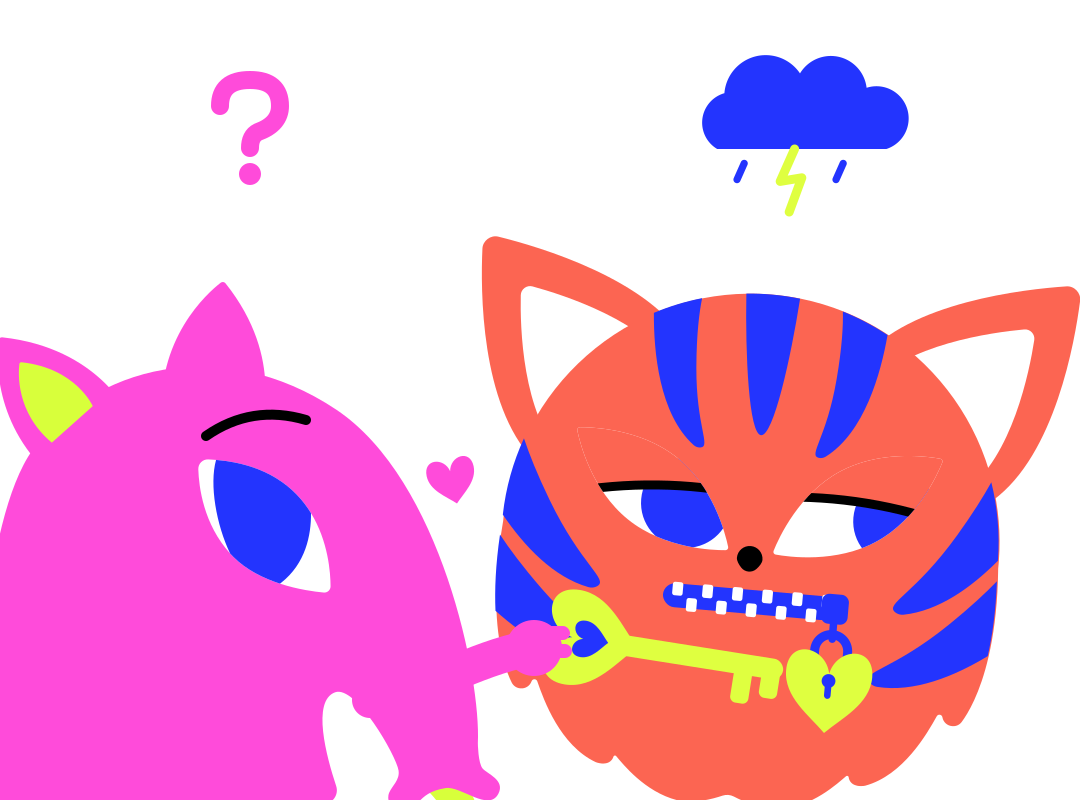

"Behind this kind of behavior there is often an internal process."
We look for the key to this closed door together with a psychologist and body-oriented therapist.
When things are hard, I:
My partner is closed off.
When something's wrong, he withdraws into himself and doesn't talk to me.
It drives me mad that we don't discuss our problems. What should I do?
Discussing problems and finding solutions together is an important skill in a relationship.
But sometimes one partner reacts to stress or conflict in their own way: they shut down, withdraw into themselves and don't want to talk. And that can be irritating, especially if you're used to resolving things by talking.
If this sounds like a pattern in your relationship, let's figure out what to do.
Understand the reasons for shutting down
When your partner shuts down and doesn't want to talk, you might decide it's because of you. But it may have nothing to do with you personally. Behind this kind of behavior there is often not ignoring or neglect, but an internal process. Your partner may need time and solitude to make sense of their feelings or simply to digest the situation. Not everyone is ready to discuss what they're going through right away.
Don't pressure
When your request to talk goes unanswered, you may feel the urge to insist. But if you pressure your partner, the withdrawal may only get stronger. Instead, suggest a time to talk when it will be comfortable for both of you.
Choose a calm setting
If your partner tends to shut down in stressful situations, try starting conversations about important things when the atmosphere is more relaxed. In those moments he may be ready to talk more openly about what he's going through.
Find out what will help him
Ask your partner what he needs in those moments. It's better to have this conversation not when he has already withdrawn into himself, but when you're both in an optimal state. We don't work out evacuation routes in the middle of a fire.
Think about yourself
It's important not to set your own feelings aside, too. Anger, frustration, irritation or helplessness are a normal reaction to feeling misunderstood or lonely. Being aware of this, you'll be able to find more constructive ways to respond.
Be honest about your feelings. You can tell your partner:

"It's hard for me when you don't want to talk, I'm worried we won't solve the problem."
Open conversations like this become the key to emotional intimacy.
Understanding that each of you has your own reactions in difficult situations will make these moments easier to bear. Give your partner time and space, but don't forget about your own feelings.
Relationships require engagement. Try different ways and methods of building communication.
You need to find what will work for you and help your particular couple.