My wedding is coming up, and I want to run away
Calming pre-wedding anxiety together with a clinical psychologist
My wedding is coming up, and I want to run away
Your wedding is coming up, and here they are, those famous pre-wedding jitters?
Let's breathe out and calm pre-wedding anxieties together with a clinical psychologist.
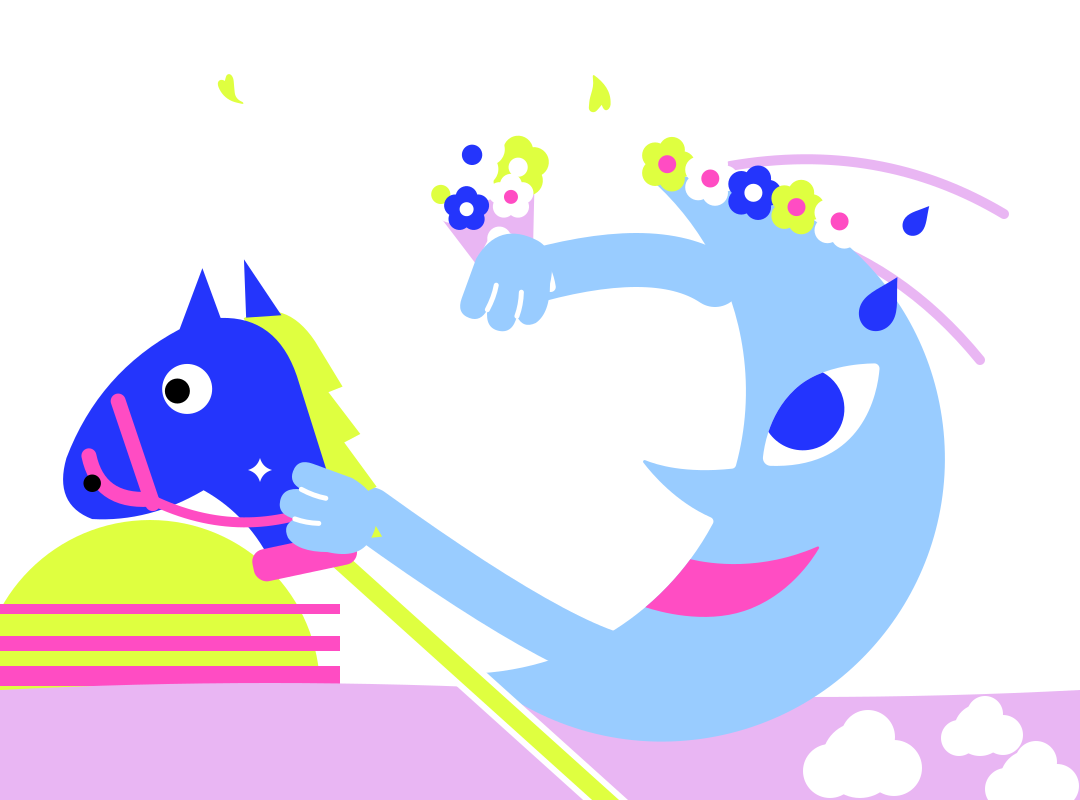
Your wedding is coming up, and you catch yourself thinking you'd gladly saddle a horse and ride off into the sunset?
Everything seems to be as it should: the person next to you loves you, the planning is in full swing, the guests have already bought gifts from the wishlist, but inside there's anxiety, a feeling that you're doing something wrong.
An inner conflict arises that's hard to untangle: is it intuition or a fear of intimacy? A premonition and an unconscious signal that this person isn't right for you, or natural nerves before a big step?
From a psychological point of view, this kind of wavering is normal.
It may be connected to the fact that you're in a transitional phase: a state where one identity is ending and another is only just taking shape.
A wedding isn't just a celebration, it's a symbolic border between "me as a separate person" and "me as part of a couple."
On the eve of marriage, doubts wake up: am I ready for this responsibility? Am I ready for a new "me"?
This transformation needs to be processed and made sense of.
The novelty of the situation and the social stress that comes with it cause inner tension and anxiety. This shows up especially sharply in people with an avoidant attachment style: for them, the idea of stable emotional closeness often comes with a sense that their autonomy is under threat.
If there were traumatic relationships or experiences of emotional instability in the past, pre-wedding stress may not only intensify but also trigger the urge to run away.
In such cases, psychotherapy explores not only the fear itself, but also how the person copes with frustration and uncertainty.
Doubts are a sign of self-reflection and of the ability not to simply go along with social expectations.
And the other way around: a sudden "I'm calling it all off" can be an impulse driven not by a conscious choice but, for example, by a fear of turning out to be less than perfect.
Try giving yourself the right to doubt without making an immediate decision.
Write down what exactly you're afraid of: losing yourself, making a mistake, repeating your parents' experience, losing your freedom?
Sort out your feelings: where is the fear, where is the baggage of past experience, and where is simply exhaustion from the planning and a pile of to-dos.
Anxiety eases when you start seeing it as a signal from your body, rather than a signal from your intuition that will ruin your life if you ignore it.
Having doubts before an important step is a sign of your responsibility and sensitivity.
Jitters like these show that you're entering an important phase of your life consciously, paying attention to yourself.