My partner and I need different amounts of touch: what should I do?
A psychologist and body-oriented therapist on what to do if you don't get enough touch from your partner.
My partner and I need different amounts of touch: what should I do?
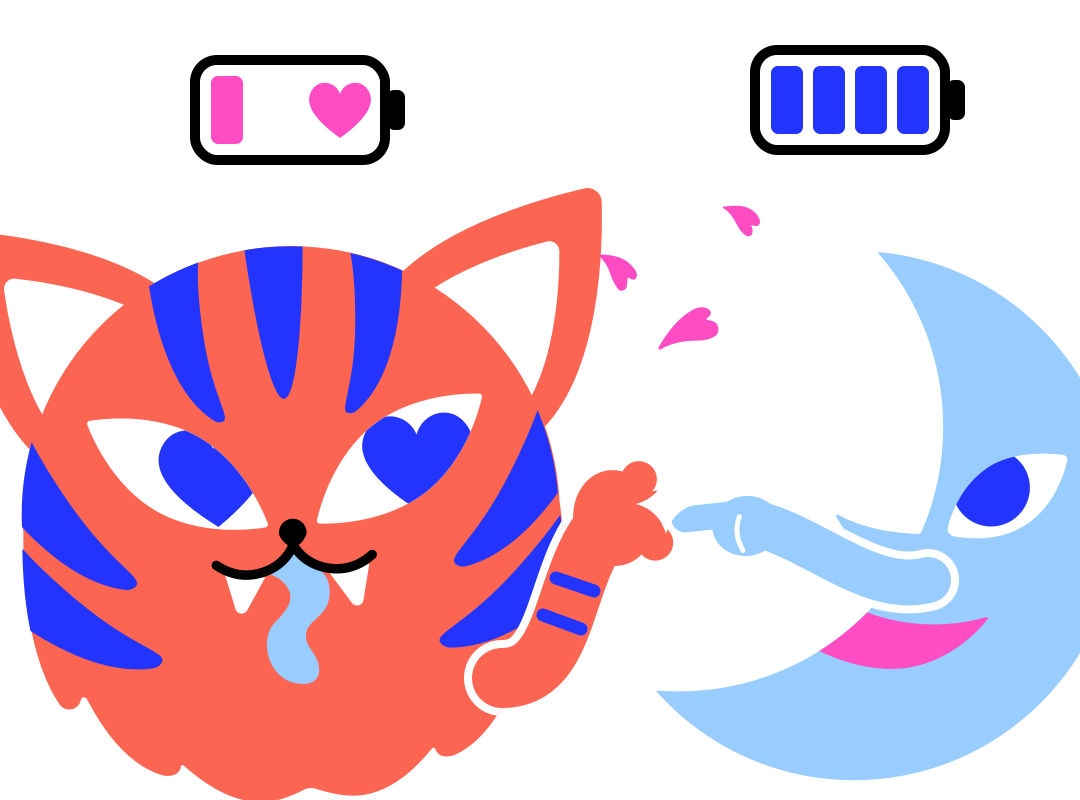
Touch is sometimes not about touch at all.
Purpur asked a psychologist and body-oriented therapist what to do if you don't get enough touch from your partner.
How are things with touch for you?

How do I stop feeling hurt that his attention is never enough for me?
Touch is an important part of our relationships. We often expect our partner to show us as much attention as we need.
And if your needs for physical contact differ, one of you may feel not noticed enough or even hurt.
Let's look at what you can do about it.
Acknowledge the difference
Start by acknowledging that differences in the need for touch are an absolutely normal and natural part of human nature.
Some people need physical contact to feel loved and connected to another person. Others are less inclined toward frequent hugs, kisses or other forms of physical closeness.
This doesn't mean that one of you loves the other less — each person simply has their own way of experiencing attachment.
Explore your own feelings
It's important to understand what exactly is upsetting you.
Why do you need more physical contact? Maybe it has to do with feeling lonely? Or with a need for more acceptance? Or with physical exhaustion from a lack of closeness?
Try to explore and understand your feelings and what exactly you want to receive from your partner.
An honest conversation
Yes, it can be hard, but it's the key to solving the problem. Don't start the conversation with accusations or complaints; instead, try to express your feelings and needs. For example:

"Sometimes I miss your attention and your hugs. I feel closer to you when we're physically near each other."
That way your partner can understand what you're going through — perhaps they didn't realize how important physical contact is to you.
Hear your partner
Listen to your partner. It's important to understand their position and not to take the lack of physical affection personally. Perhaps they aren't physically affectionate for personal reasons of their own — stress, dissatisfaction or even difficulty expressing their feelings through physical contact.
Touch is sometimes not about touch at all
A lack of touch can be linked to inner feelings of insecurity or a fear of being rejected.
If you feel that you're not getting enough attention from your partner, it may be worth working on your sense of self-worth.
This will help you not to depend solely on outward expressions of love, and to learn to create an inner sense of fulfillment.
Find common ground
Once you've talked about your needs, try to find a compromise. For example, if your partner isn't used to frequent hugs, you could suggest starting small — holding hands, putting a hand on their shoulder, sitting close while you talk. This will help gradually narrow the gap in your needs for touch and create space for mutual expressions of closeness.
Forceful or ill-considered attempts to change your partner when it comes to touch can backfire. Every person has their own boundaries, and they need to be respected. Even if you feel that your relationship needs more physical closeness to survive, it's important to consider how comfortable you both are with it.
Other expressions of closeness
Try to build closeness not only through touch but through other forms as well. For example, talking more often, doing things together, spending quality time together, creating new rituals for the two of you. Perhaps it's easier for your partner to show care through actions rather than physical contact. It's important to learn to see these signs and notice them.
Tolerance and patience
This isn't about clamping down and suppressing your feelings inside, but about developing the skill of containment — the ability to hold difficult emotions in the moment. The main thing here is not to forget to empty that container.
Check in on each other's needs over time
Our needs and preferences can change, so it's worth coming back to the topic of touch from time to time and discussing how both of you are feeling.
This will help maintain a healthy relationship in which both partners feel heard and valued.