I have a dog and I'm expecting a baby: what should I do?
We asked our favourite experts at Pi-Bo to explain how to prepare a dog for big changes.
I have a dog and I'm expecting a baby: what should I do?
I have a dog, and I'm expecting a baby. What should I do?
We asked our favourite experts at Pi-Bo to explain how to prepare a dog for big changes, specially for the readers of Purpur and Purpur Mama 💕
Give yourself time
To begin with, remember that during pregnancy it's not only your body that changes, but also your energy levels, your patience and your physical stamina. You need to take this into account to set realistic goals and prepare well for the arrival of a new family member!
In the first trimester, training your dog can be hard, because your body is only just "learning" to be pregnant — and it shows this through fatigue, nausea, dizziness, heightened sensitivity to smells and emotional ups and downs.
Don't rush into complex exercises with your dog if you don't feel calm and steady. It's better to stick to familiar, simple activities and to observing your dog through a new lens.
Assess your dog's current behaviour
How does it react to sudden noises, strangers, intrusions into its personal space?
Does it noticeably guard resources (toys, food, its spot)?
How does it cope with being alone, changes in routine, unexpected events?
Work out which things your dog finds hardest, and think about whether the problem can be solved through managing the environment alone — for example, by giving the dog its own room where it can feel calm.
If not, you'll need to work on your dog's behaviour and help it adapt to being around a baby. Contact a dog behaviour specialist and make a plan together.
Gradually introduce your dog to the coming changes
1. Sounds:
Play recordings of a baby crying, cooing and babbling. Start at a volume at which your dog reacts calmly or with indifference. Keep an eye on how it's doing and don't let it get scared, overexcited or worn out.
2. Smells:
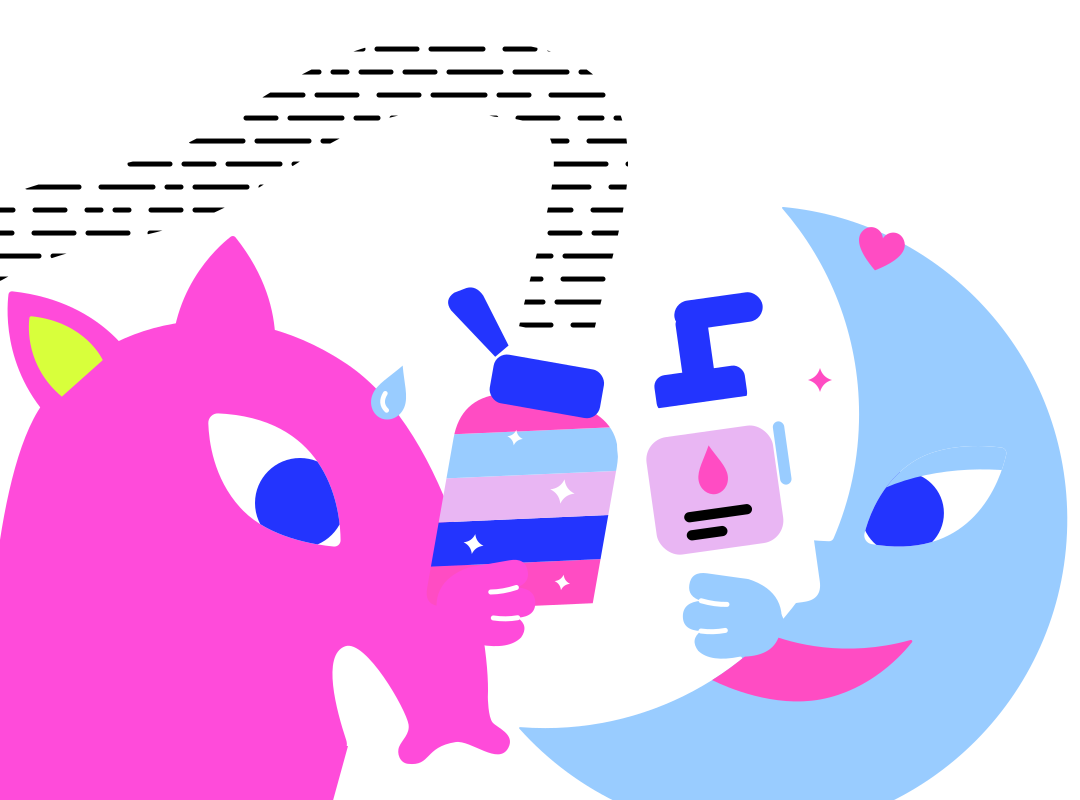
Show your dog the baby's hygiene products (creams, nappies, powders) and let it sniff them.
3. Objects:
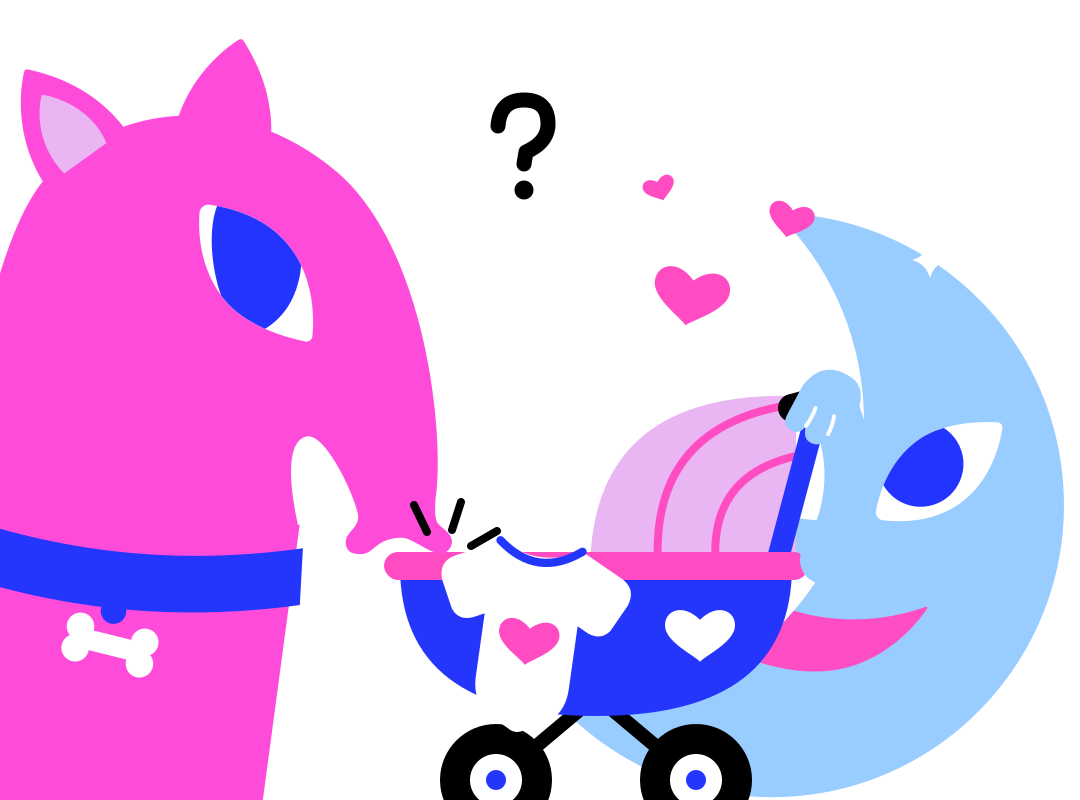
Gradually bring the pram, cot, baby swing and so on into the home. Let your dog explore these things calmly, at its own pace, and don't forbid it from touching and sniffing them.
4. A place of its own:
Set up a "den" for your dog — a quiet place it can retreat to where no one will disturb it. Use soundproofing and background music or coloured noise so the den always stays calm — even if the baby cries all night or the doctor comes round.
Change your dog's lifestyle smoothly and in advance
New routine:
Little by little, shift your dog's walking and feeding schedule so it looks more like the one you'll have after the baby is born.
If you plan to restrict access to the nursery, gradually teach your dog that it can't be in there without permission.
Exercises:
If your dog needs extra exercises to adapt, start them early so you don't rush your dog or overload yourself.
Don't put it off until the baby is born: by then it will be too late for the dog, and you'll have no time at all for the dog yourself.
Teach your dog useful basic commands
Ones that will make life easier with a big belly, a baby in your arms and a pram:
"Let me pass" — so the dog steps aside
"Wait" / "Sit" — any convenient command to keep the dog in one place so it doesn't get in the way while you tidy up or move things around
"Leave it" — for anything the dog might mistake for a toy or food. For example, if you drop a baby sock and it's hard for you to race the dog to pick it up
If you have the energy and the wish, you can teach your dog some extra useful tricks:
- Picking things up off the floor for you, so you don't have to bend down
- Finding your keys and phone around the flat
- Signalling a dirty nappy before it becomes obvious
Because a dog can do more than just stay out of the way — it can actually help with motherhood!
You can start all of this as soon as you feel well. For many people that's the second trimester of pregnancy: a burst of energy, a steady appetite, less morning sickness.
Find a dog sitter or dog walker in advance
You'll definitely need help in the late stages of pregnancy and while the baby is very small. It's better to already have a familiar helper "on call" whom you can bring in quickly.
Introduce your dog to them in advance, go on walks together and explain all your dog's quirks while you still have the energy.
By the third trimester fatigue usually builds up, and meeting the needs of a dog — especially an active and/or strong one — will be harder.
But every pregnancy is different, and you may need a dog walker's help or even to hand over all of the dog's care throughout your whole pregnancy — and that's normal.
Listen to yourself and save your strength!
Take care of your dog's health (and your own)
During pregnancy it makes sense to be especially careful about parasite prevention, treatments and vaccinations — this is ordinary hygiene that protects your dog, you and your future baby.
Separately, check that the way you treat your dog for external parasites is safe for a home with a newborn. If needed, choose an alternative in advance together with your vet.
By the way, the common fear that "a dog in the home is dangerous for a pregnant woman" is largely exaggerated. The best-known "pregnancy" infection, toxoplasmosis, is linked primarily to cat faeces and raw meat, not to dogs. So it's not about keeping away from your dog, but about ordinary care: washing your hands, keeping up with treatments and not letting hygiene slide.
Don't be surprised by your feelings
During pregnancy and after giving birth, the way you feel about your dog may change — and that's normal. Amid hormonal shifts, some women feel an especially strong urge to care for their animal (even to the point of wanting to get another puppy), while others, on the contrary, grow emotionally distant from their pet.
Sometimes this is explained by the mind "clearing space" for one's own child — but whatever lies behind it, these swings in feeling are no reason to blame yourself. They're normal phases, and it's important to prepare for them in advance. For example, keep the number of a helper to hand whom you can pass the dog to when you can't manage to look after it. Or agree with your loved ones that they'll talk you out of bringing home every cute puppy and kitten!
And the main rule for later
All this preparation is for one thing: so that your dog and your baby meet calmly.
Once the baby arrives, keep a universal rule in mind: a dog and a newborn must never be left together unsupervised, even if the dog is perfectly trained and adores children. This isn't about distrusting your dog — it's about the fact that there should always be an attentive adult near the baby. And let the introductions always be started by an adult, not the child — calmly, at a pace that's comfortable for the dog. Baby gates and closed doors will help you avoid being "on guard" every second.