How to break up well: myths about breakups, part one
A psychologist on why breakups bring out sides of ourselves we'd rather not see, and on the first two myths about saving a relationship.
How to break up well: myths about breakups, part one
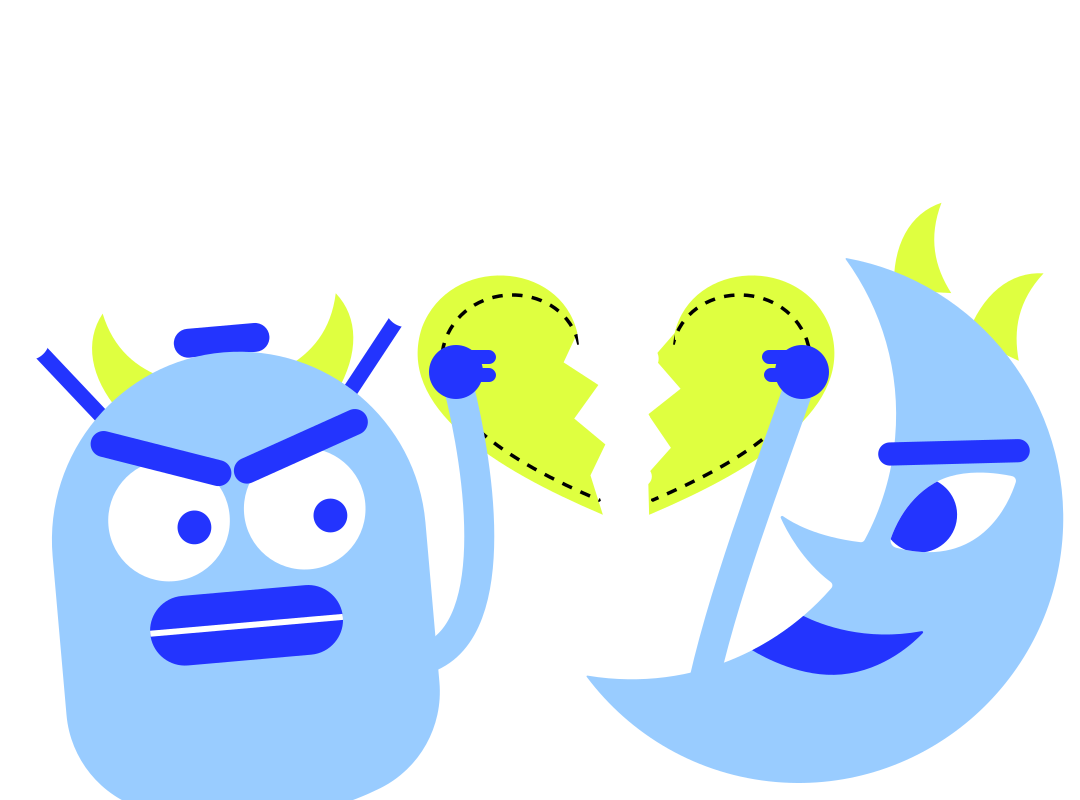
Today we're talking about something important and perhaps painful: exes. We invited a psychologist, body-oriented therapist, certified eating disorder specialist and author of several programmes to write for us. We received this text a couple of days ago and couldn't stop reading. Everyone has something to remember and reflect on. Today we're publishing the first part (of three).

“There's a saying: ‘If you want to get to know a person better, divorce them.’ The truth is that even if you weren't married, at the moment a relationship ends it's extremely hard to stay neutral, mindful and in control of your emotions. During this period we show ourselves and our partner the very qualities we try to believe we don't have. You think you're not vindictive, you don't manipulate, you let go of grudges easily? You may not find yourself that way while ending a long-term relationship. In any case, one thing can be said for sure: a breakup is one of the most energy-consuming processes there is, and it drains everyone involved. Especially, again, when it comes to a long-term relationship.
A breakup changes our life and is experienced as a loss, with the same stages we know as the stages of grief: denial, anger, bargaining, sadness and acceptance. And, as with grief, there is no strict order: emotions sometimes come chaotically, and their intensity can vary. In this sense, a healthy breakup is perhaps one where you manage to go through all these stages while doing as little damage as possible to yourself and to the loved ones involved, and maybe, if you're lucky, even turn the relationship into a friendship at the end. But that's not so easy. When we're in pain, it's extremely hard to stay in touch with our awareness. We tend to deceive ourselves and sincerely believe it. To idealise our partner or, on the contrary, devalue them. To convince ourselves that the relationship isn't dead and can still be fixed or, conversely, to end it in a deliberately harsh way out of our own exhaustion, guilt and fear that we ‘won't be let go’. To understand how to break up in a healthy way, let's try to unpack the most popular myths surrounding breakups and work out which of them are true and which are not.
Myth 1. If at least one partner is ready to “fight for the relationship”, it can still be fixed
Not true. You can't build a bridge from one side. Without the other partner's desire and involvement, the relationship can't be improved and the crisis can't be overcome. Yes, sometimes an unwillingness to continue hides reasons that can be overcome and get resolved as you build a dialogue, but far from always. Which, by the way, doesn't mean you shouldn't build that dialogue 🙂
Myth 2. Couples therapy will save everyone
Not quite true. It won't save everyone from a breakup. But couples therapy is a form of help and, more often than not, a useful one. First, it lets you hear each other, so that if you do break up, you do it having weighed everything and on good terms. Second, it makes negotiations easier when there's something to divide (children or property). Third, it helps you understand what exactly went wrong in the relationship and lowers the risk of making the same mistakes in your next one. Especially if you combine couples therapy with individual therapy. But none of this is a guarantee that you won't break up.”