Cystitis
What cystitis is, why sex can trigger it, how to recognise it, how to protect yourself and how to treat it
Cystitis
If our feed has seemed a little too festive lately, don't worry: we're still the same Purpur that talks about important things. Today it's cystitis.
We're taking on this villain together with a gynecologist and podcast host. By the way, her podcast has a whole episode about cystitis. Let's arm ourselves with knowledge to fight this ailment.
What is it?
It's an inflammation of the bladder lining that happens when bacteria get into the urethra.
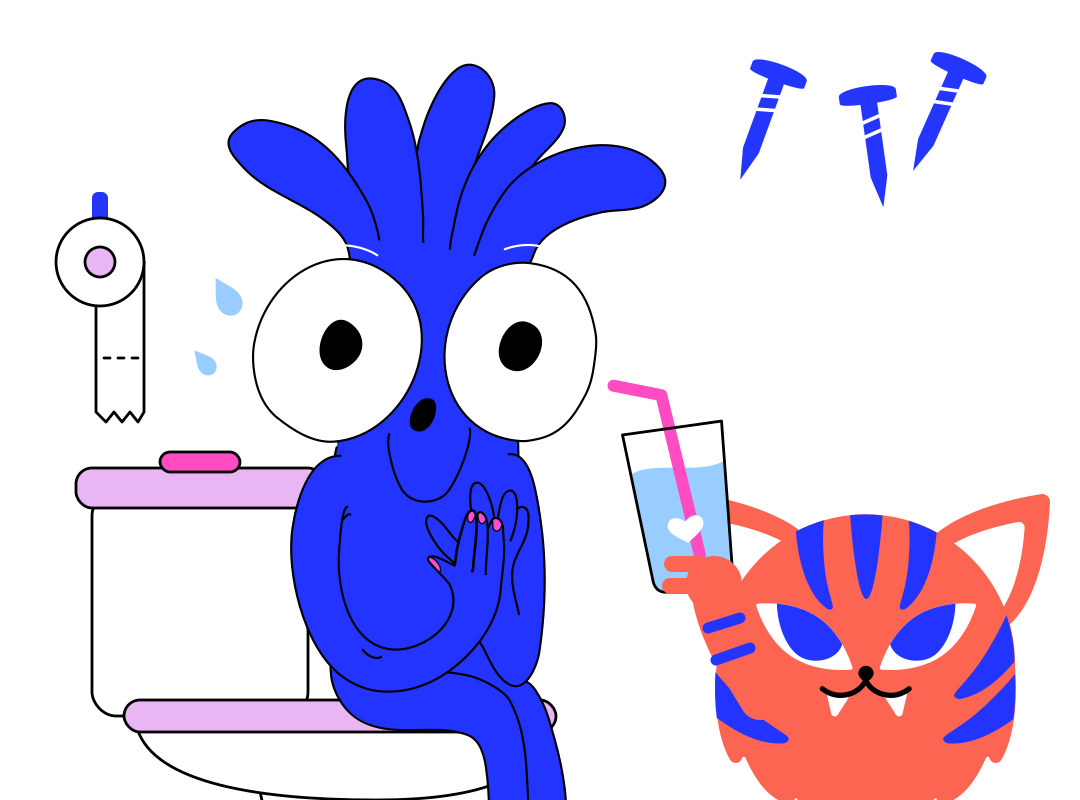
In the great series Girls, the main character described what cystitis feels like this way: "It's like peeing nails."
Cystitis is a real nuisance for everyone with a vagina
Anyone can get cystitis, but the risk is higher for people with a vagina. Their urethra is shorter and sits closer to the anus and the vagina, so bacteria travel up it to the bladder more easily.
Cystitis and sex
Sex is a great opportunity for harmful and opportunistic bacteria to sneak into the urinary tract.
But the causes can still vary:
1. Traumatic intercourse
2. A new partner
3. Gynecological conditions
4. Hormonal imbalance
5. Using spermicides
6. Urethral hypermobility*
7. Improper hygiene
- This is increased mobility of the external opening of the urethra caused by adhesions.
What are the symptoms of cystitis?
1. Pain in the lower abdomen
2. Painful and frequent urination
3. Difficulty urinating: you need to pee but can't
4. A change in urine colour or blood in the urine
How to protect yourself
1. Stay hydrated: drink about 1.5 litres of water a day
2. Don't hold it in: if you need to pee, pee
3. Use lube to reduce the risk of micro-injuries
4. Forget about douching
The skin and mucous membranes of your genitals are super delicate and need gentle, but not excessive, care:
1. Wash from front to back
2. Don't use intimate scrubs, masks or deodorants: it's all marketing. Water is enough for these delicate parts. If you want to use soap, choose one with a neutral or acidic pH
Pee after sex
This will help flush bacteria out of the urethra.
How to treat cystitis
See a gynecologist, a general practitioner or a urologist. Ideally as soon as possible, and most importantly, don't self-medicate: no painkillers or antibiotics before you've seen a doctor.