Withdrawal and emergency contraception
What to do after interrupted intercourse: STI testing, emergency contraception options, how they work, side effects and contraindications.
With Olya Krumkach, obstetrician-gynaecologist
Withdrawal and emergency contraception
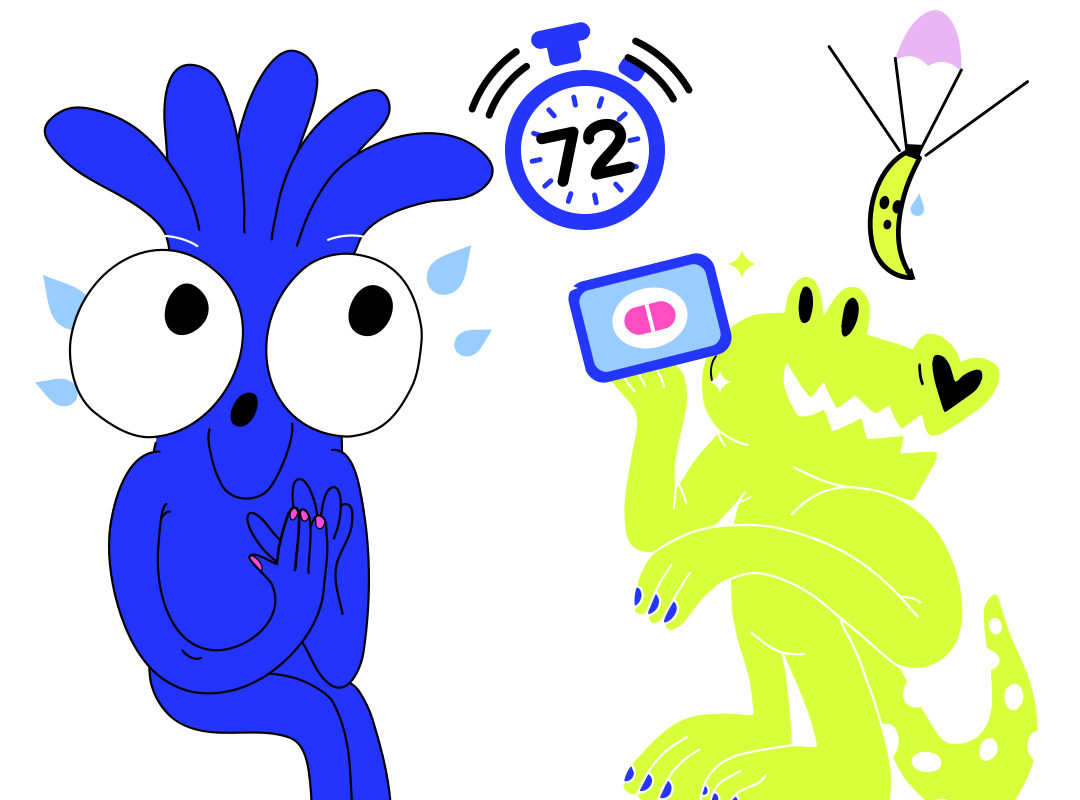
Purpur hopes you'll only ever come across withdrawal in theory. We prepared this together with an obstetrician-gynecologist and podcast host.
What is it?
Withdrawal (interrupted intercourse) means stopping sex before ejaculation.
If you're not sure about your partner, get tested for STIs and have a gynecological check-up with a vaginal flora smear. And to avoid pregnancy, use emergency contraception.
Types of emergency contraception
The most popular method of emergency contraception is the pill.
Another option is an intrauterine device (IUD), which is reliable long-term contraception in itself, but can also work as emergency contraception if it's inserted right after withdrawal.
According to the WHO, both methods are only effective within 72 hours after sex, and they work in 95% of cases when used in time.
Neither the IUD nor the pills protect against STIs
How the pills and IUDs work
The pills delay ovulation, while an IUD slows the movement of sperm into the uterine cavity and shortens the lifespan of the egg. Emergency contraception can't end a pregnancy that has already begun or harm a developing embryo.
Contrary to the myths, emergency contraceptives don't harm fertility. The exception is when they're used incorrectly or when there were already reproductive health problems beforehand.
Emergency contraception shouldn't replace regular contraception
What side effects are there?
They're uncommon and usually go away on their own. The side effects of emergency contraception are similar to those of oral contraceptives:
- Nausea and vomiting
- Weakness
- Headache
- Light vaginal bleeding
- Discomfort and pain in the lower abdomen
There are no age restrictions on emergency contraception, but there may be contraindications*
- A doctor's consultation is required
First published · English edition