Why photograph your own nudity?
A photographer on the theory of nude self-portraits: when a photo becomes art, a part of a personal archive or a tool for self-reflection.
Why photograph your own nudity?
Why photograph your own nudity? We look for the answer in our research with Filmly — through your answers and more.
This time we're helped by a photographer who explores the female body and helps women understand it better, including through the nude self-portrait.
Today she shares the theory of nude self-portraits: she explains when a photo becomes art, and how to see a picture as part of a personal archive or as a tool for self-reflection.
Practical tips are coming in tomorrow's post 💖

"Sometimes we photograph ourselves naked not because we love our body, but because we want to understand how we actually feel about it."
18+ · Theory · A photographer on nude self-portraits
Contents
(3–4) The photo as art
(5–6) The photo as part of a personal archive
(7–10) The photo as a tool for self-reflection
The photo as art
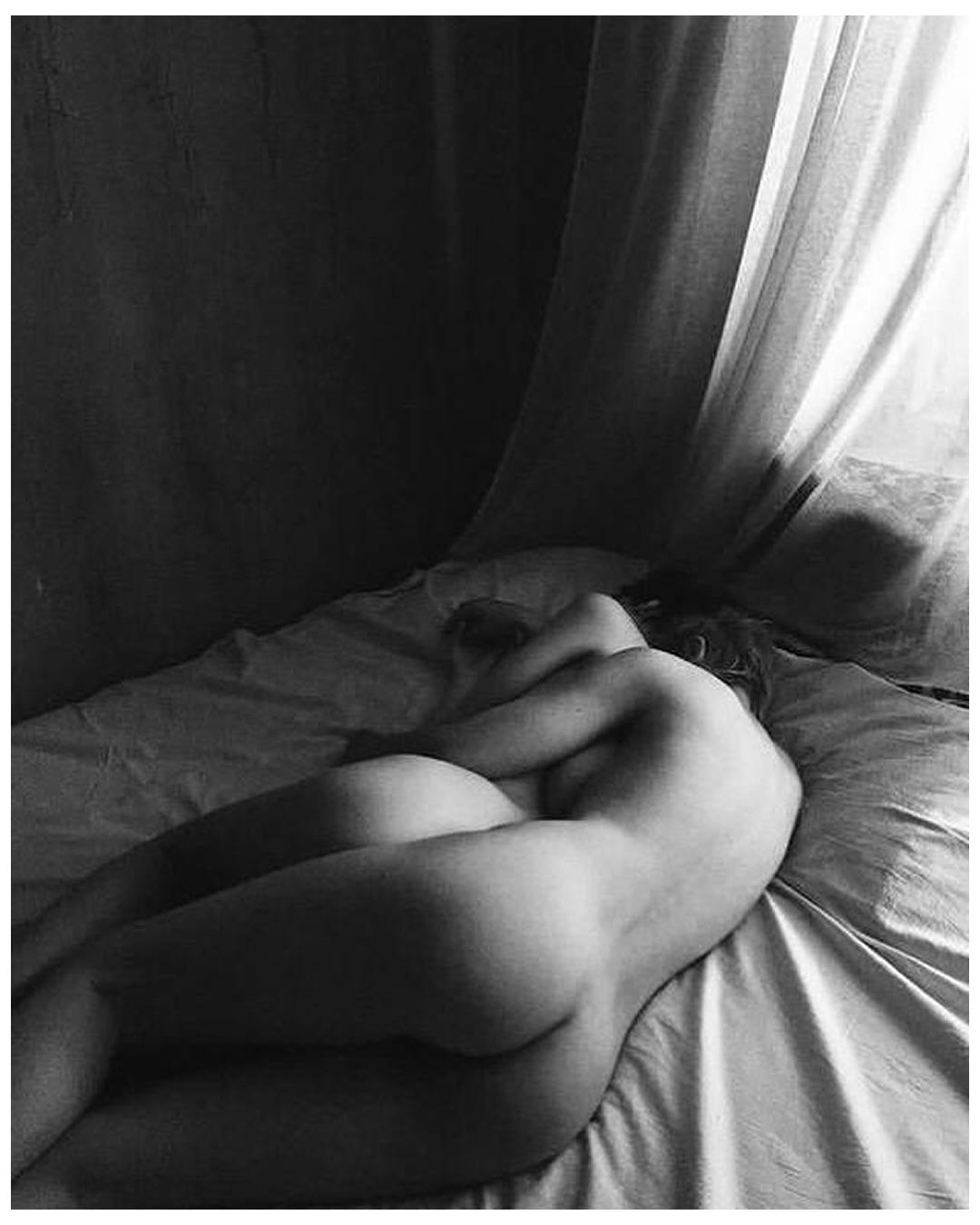
In painting, a nude body could be Venus, a nymph, an allegory — an image detached from any specific living person.
Photography complicated everything, because the image came to be seen as the trace of a real intimate event: the viewer understood that a living person had actually stood in front of the camera and undressed for this shot. That's why nude photography has, from the very beginning, balanced between art and taboo, between eroticism and vulgarity.
The question was no longer only what was depicted, but also who this person was, why they undressed, and who the picture was meant for.
The self-portrait added another twist: people themselves began to decide how their naked body would be seen and how it would be shown.
The same picture can strike different people as beautiful, intimate, erotic, provocative or completely neutral — there is no single clear line here.
But how we read a photograph is usually shaped by:
Context — the caption, the surroundings and the place create associations before the viewer even starts looking at the body.
Pose — it directs attention to form, movement and composition, or emphasizes sexuality more strongly.
Facial expression and gestures — a gaze into the camera, the expression on the face*, the position of the hands can completely change the mood of a shot.
Presentation — the angle, the framing, the light, the cropping and the focus on particular parts of the body.
Which means that whether something counts as art depends not on the body, but on what kind of gaze the photograph creates.
- That's exactly why the face is often hidden or kept neutral in nude photography: this shifts attention from emotion to the body, form and composition.
The photo as part of a personal archive
We're used to photographing trips, friends, children, food, apartments, celebrations — everything we're afraid of forgetting and want to keep.
But the body holds time too: age, relationships, illnesses, being in love, exhaustion, moves. Different versions of ourselves.
In this logic, a nude may be not a beautiful photo but part of a personal archive — one whose value sometimes only becomes clear much later.
The body is part of your biography too
Documenting yourself doesn't mean creating a beautiful image; sometimes it matters more to preserve a state of being than to catch a flattering angle.
Self-documentation doesn't necessarily help you remember how you looked; sometimes it lets you remember what it was like to live in that body.
The photo as a tool for self-reflection
I started photographing myself when I realized that I could see beauty in other people's bodies, but didn't even consider my own worth photographing.
Not because I hated it or had a lot of hang-ups — rather, I simply didn't perceive it as part of myself.
There was a lot going on at once:
habitual criticism of my appearance,
someone's words that I wasn't feminine enough,
an upbringing in which admiring yourself was something almost shameful.
It was far more important to be smart, kind, interesting — and the body seemed to exist somewhere separate from all of that.
Sometimes alienation from the body looks not like hatred of it, but like a lack of any interest in it at all.
Once I started photographing myself almost as an object — through form, light, line — I began, for the first time, to notice what I actually look like, and gradually to get to know myself.
The self-portrait didn't teach me to love everything about myself, but it helped me claim my body as my own: to notice its changes, to be grateful to it and to take better care of it.
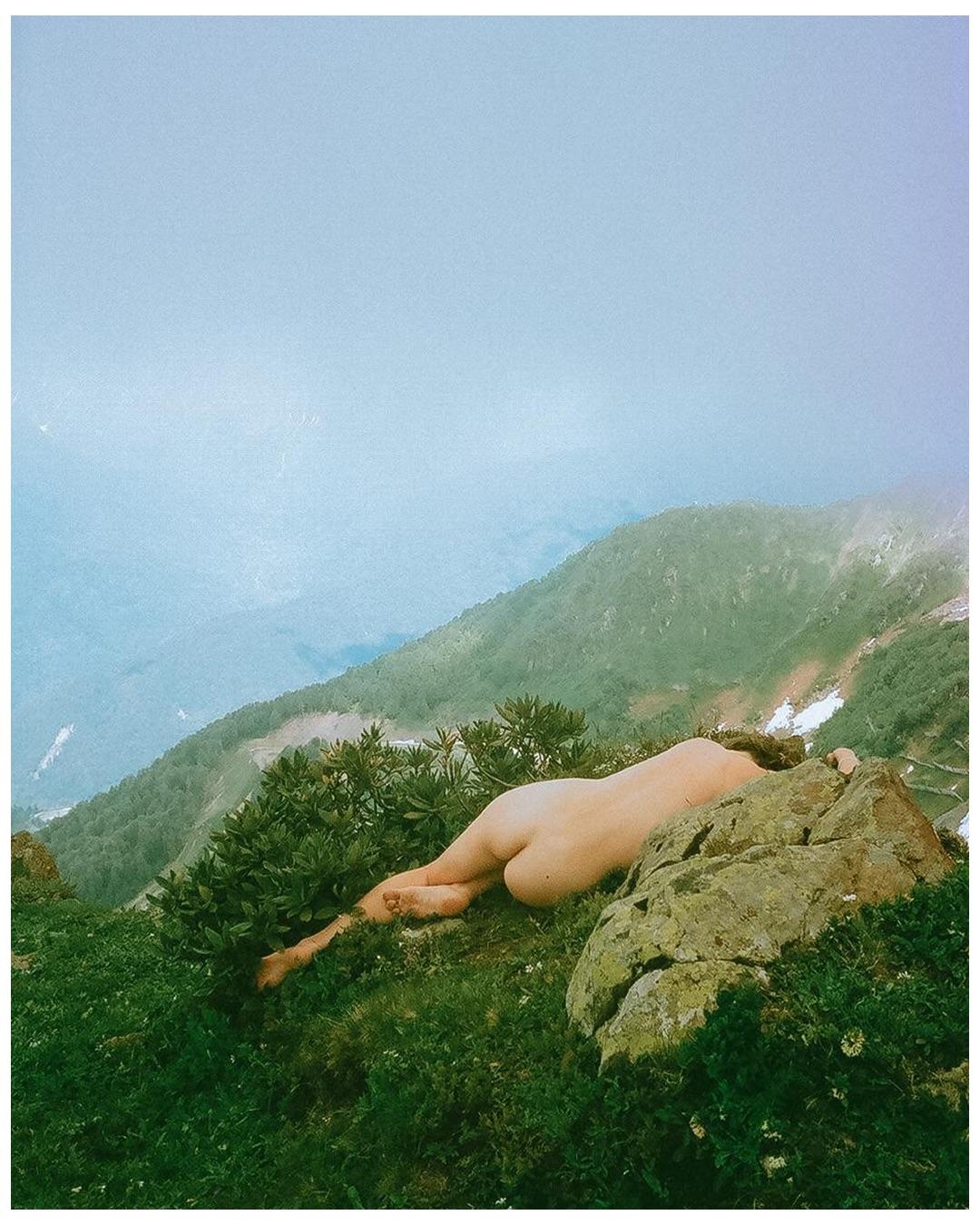
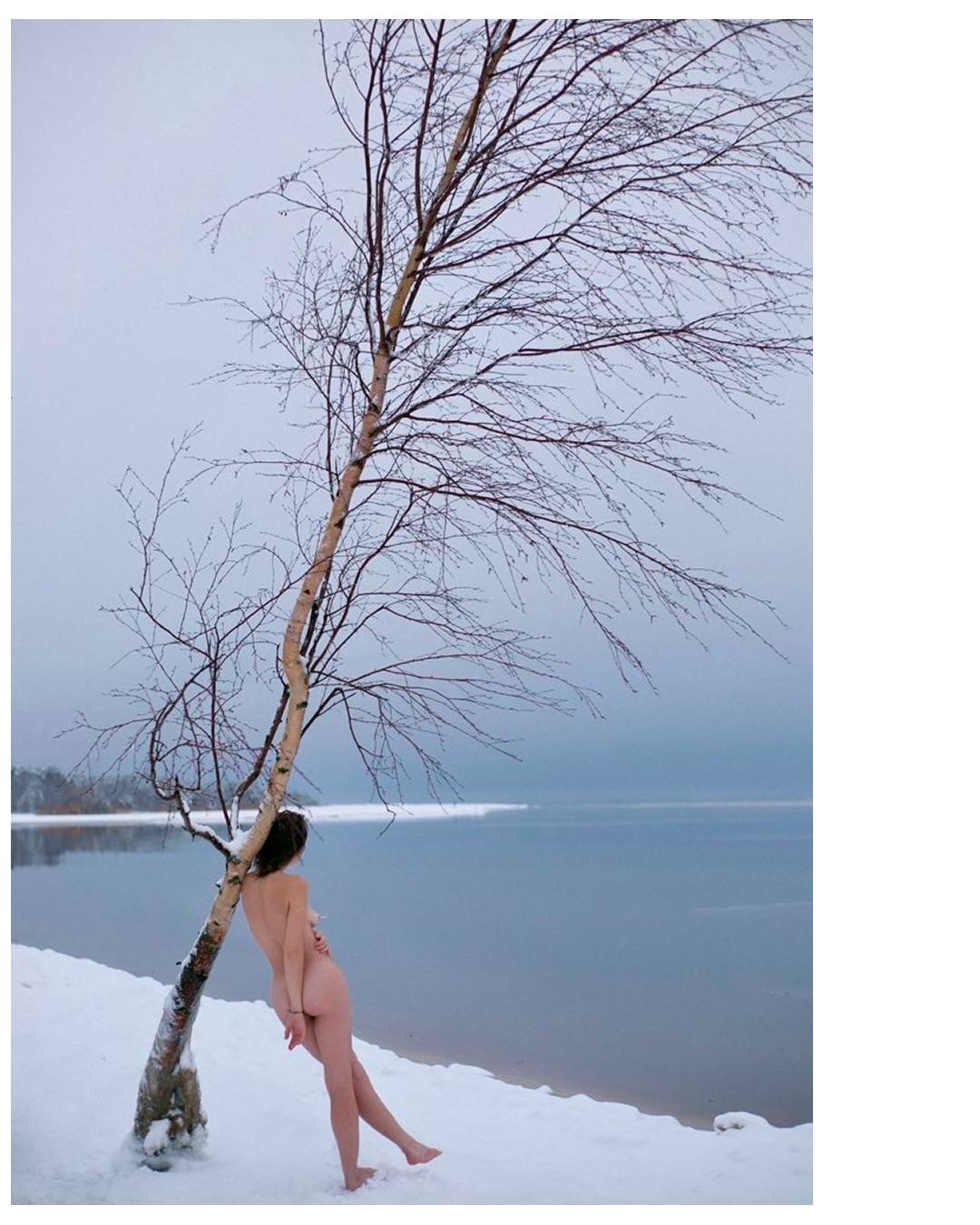
Now I especially love shooting in nature
There, the body becomes part of something alive — natural and constantly changing. Tactile sensations help me relax too: feeling the earth, the grass, the water, the wind, and thinking less about how I look in the frame. It's in this kind of setting that I feel most free and comfortable while shooting.
And over time, nudity stopped feeling like something shameful, vulgar or provocative. It simply became natural.
Perhaps the most important change for me isn't that I've come to like myself more, but that my body has stopped being something separate from me.
In lieu of a conclusion
Perhaps what makes nudes interesting is precisely that they have no single right reason or meaning — a nude can be flirting, art, a personal archive, an exploration, a game, or simply a photo no one will ever see.
And perhaps the most valuable thing about a self-portrait isn't finally getting to see your own beauty, but the chance to choose for yourself how to look at yourself and what to see.
You don't have to love everything you see. You don't have to overcome anything in yourself or prove anything to yourself. Sometimes a self-portrait is simply a way to look at yourself more closely and hold on to that moment.
- Practical tips on how to start taking nude self-portraits are in the next post.