Quarter-life crisis
A world of matching tattoos with a surf instructor and the fear that you're already too late to make something of yourself.
Quarter-life crisis
There should be a joke here: stay tuned — a midlife crisis is up next. But seriously: it will be scary at first, but by the end of the post it will get better, we promise.
A psychoanalytic psychologist and author of a Telegram channel about analytic practice talks about something almost all of us know, even if you may not have known what it's called — the quarter-life crisis.
A world of matching tattoos with a surf instructor and the fear that you're already too late to make something of yourself.
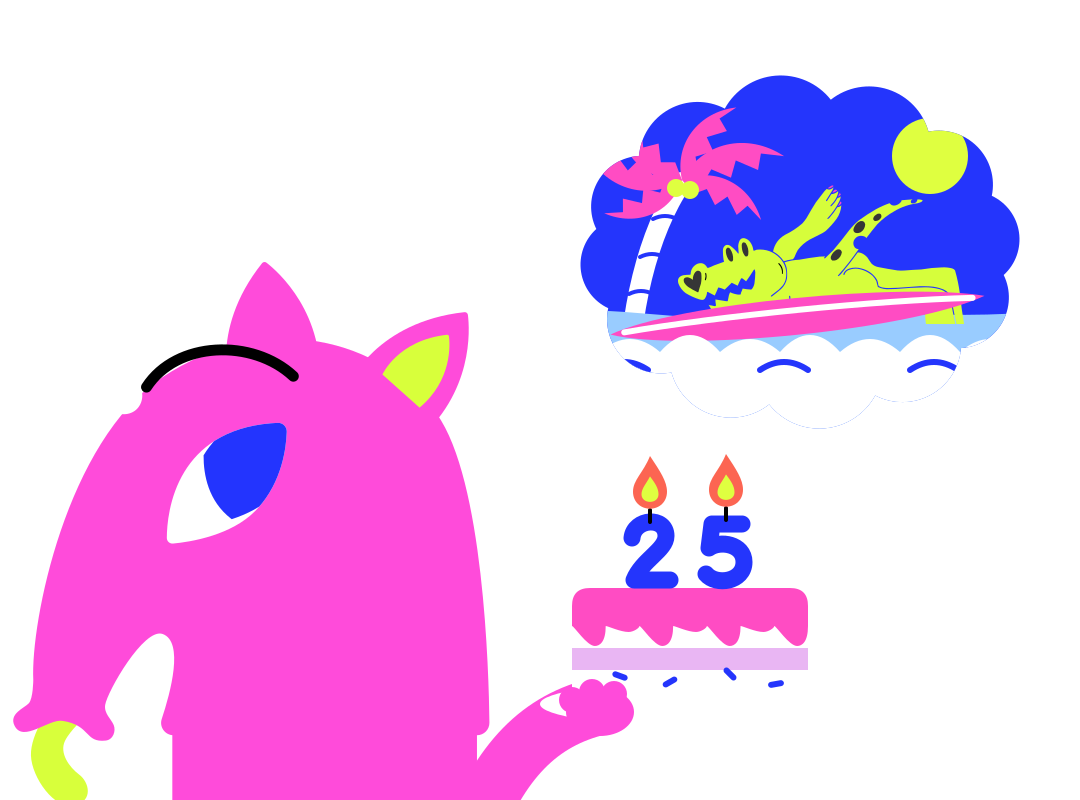
You still don't know what you want to be when you grow up, your heart has already been broken a few times, and sometimes you just want to drop everything, move to Bali, have an affair with a surf instructor and get matching tattoos. Sounds like a quarter-life crisis.
It's a state that hits many people between 25 and 35. Disappointment, stress and doubts about how your life is turning out. Sound familiar?
This period of life is an in-between world: on one side are those serious GROWN-UPS, on the other, carefree kids. In spirit you're still with the kids, but you already feel too old for them, while for the grown-ups you're not yet weighed down enough by life.
A quarter-life crisis is the collapse of the idealised picture of "who I'll be when I grow up". You look at yourself and realise that you haven't really grown up — you've stayed the same, just more tired.
What leads to a quarter-life crisis?
Comparing yourself with others
Social media and the false sense of success it creates. Everyone looks great, works out all the time, grows in their career, travels a lot — or any other thing that makes you envious*. We compare our whole selves, with all our flaws, mistakes and achievements, with the idealised, partial images that others put out on social media. You have to agree, that's not very fair, is it?
*A great feeling! Envy helps reveal your needs. If we're envious, it means we want what others have.
Pressure from society
Finish university at 22, become a senior at 25, get married at 28, and by 30 ideally have two kids. Many people have a pretty clear framework of what they're supposed to get done in time. Meanwhile, they don't develop flexibility towards circumstances and a changing world. And this mismatch with the standards imposed by society — or by ourselves — leads to a sense of inadequacy.
Identity and self-discovery
At this age we rethink our life priorities and goals. This can cause conflict with our previous beliefs and the path we've been forging in life. Flexibility matters here too: test your old beliefs against what you actually want, and don't be afraid to admit they're no longer viable.
Homework:
Write all your "I should"s in a column — as many as you can.
Then, to the right of each one: who told you it has to be this way? Mum, dad, Mr Darcy or your primary school teacher.
Next: how doable and achievable is it? Read it, think it over, come back to the list later.
Career
The cult of productivity pushes us to choose a profession early, one that costs huge sums of money and several years of life. After graduating and getting our first work experience, we may realise that we don't like this path and it doesn't suit us — but turning back turns out to be scary.
Doubts swirl in your head: start everything from scratch and take a hit in income and standard of living? The fear of ending up a few steps behind stops you from looking for something else to do.
Starting over really is scary, especially when you've already achieved something. But what's scarier: starting over, or devoting a significant part of your life to something you don't love?
It's also useful to ask yourself: whose expectations and hopes will (not) be met if I drop everything now?
Finances
No savings, no financial safety cushion or investments, no home of your own or decent car, loans that exceed your income, no way to make a sudden big purchase — has everything gone dark before your eyes yet?
And even if you do have savings, they're too small. The flat is just a studio, and it doesn't look like something off Pinterest. Our needs keep growing, and our means just can't keep up.
Physical and emotional health
We're no longer just growing up — time to admit it — we're getting older. Illnesses and aches start to show up, and the body no longer forgives a lack of morning exercise and even minimal physical activity. In the mirror: expression lines and a tired complexion; on your phone: a thousand reels with tips on how to get rid of them (and it seems to have worked for everyone except you). Anxiety, depression and thoughts about going to a psychiatrist for antidepressants. And as a bonus, an unpleasant discovery: after psychotherapy you may feel worse than you did before it.
This seems to be the moment where we've scared you. Stay tuned — next we'll tell you what to do about all of this.
"I recognise myself and my sorrows in this text. What do I do?"
First, remember that you're not alone. Millennials and everyone after them are commonly considered more infantile than previous generations. And there are good reasons for that: greater economic and social well-being and more opportunities to explore yourself (lucky already!).
Second, explore your values and stay in touch with them. Values are your ideas about what kind of person you'd like to be. Finding them isn't always easy, but try to start. For example, ask yourself what brings you pleasure even when there's no reward for it (praise, payment).
More homework: imagine that a friend has gone on a famous interview show (yes, this time imagine it's not you). At some point the interviewer asks about you: what kind of person you are, what your friend is grateful to you for, what you've done for them. These answers will also bring you closer to understanding what you truly value. Stay true!
"Is there any way to avoid a quarter-life crisis?"
There was a meme here — "If possible, be born beautiful and into a rich family" — but we deleted it.
Let's admit that not living up to other people's expectations, or even your own, is nor-mal. And each of us has our own pace of life. Sometimes it helps to just get off your own back and give yourself permission — for time, for mistakes, for different paths and for searching for what suits you specifically.
A quarter-life crisis is a normal and even useful stage that helps you rethink your goals and directions. Thank you, crisis.