Menstrual cycle
What's typical, which pain is a reason to see a doctor, what PMS is, and whether sex during your period is okay: a guide from an obstetrician-gynecologist.
Menstrual cycle
Now it's official: we've brushed up on what we know about periods and sex. The basic rule is still the same: listen to yourself and your body.
A guide to periods from an obstetrician-gynecologist and podcast host.
The menstrual cycle is a regular change that takes place in the reproductive system of women. Once a month, the reproductive system "cleans itself out", shedding the unused egg and part of the lining, and this comes with bleeding and unpleasant sensations.
There is no single norm, only averages:
First period: from age 7-8 up to 16
Menopause: around 50 on average
Cycle: 21-35 days, but what matters is regularity and a consistent cycle length
The period itself: 3-7 days
And if I don't get periods, is that bad?
Amenorrhea is the absence of menstruation for more than 6 months.
Primary amenorrhea means menstruation hasn't started by age 16. It can be caused by various conditions, gynecological, somatic or genetic, and also by delayed puberty.
Secondary amenorrhea occurs during pregnancy and breastfeeding*, and with various illnesses, stress, eating disorders or excessive physical exertion, and also when taking hormonal contraceptives, antidepressants and other medications.
- Pregnancy, breastfeeding and taking hormonal contraception continuously are not a pathology. In all other cases, you need to see a doctor.
Why does it sometimes hurt during my period?
During menstruation you may have a dull, pulling pain in your lower abdomen, as well as more frequent bowel movements and urination. This is normal, as long as it doesn't cause so much distress that you constantly have to take painkillers by the handful.
The uterus is a muscular organ. It contracts so that menstrual blood, together with the old endometrium, can come out, and its contractions irritate the muscles of the rectum, the abdominal wall and the bladder, which is where all the unpleasant symptoms come from. That's what causes the discomfort.
Which pain isn't okay and is a reason to see a doctor?
If your period comes with severe pain, vomiting, nausea, fever, fainting or abnormal bleeding.
Discomfort is an inherent part of a period: like any other muscle, the uterus will contract as the endometrium is shed. But there shouldn't be pain as such.
Another reason to see a doctor is when the timing of your menstrual cycle goes off.
They say we lose iron during our period. Do we need to take something to replenish it?
No. Blood loss during menstruation is physiological. Iron is worth checking if you suspect you're developing iron deficiency or anemia, but that's an unhealthy situation and quite rare with a normal cycle.
Again, all of this is decided in the doctor's office.
What is PMS?
Because of changes in how much estrogen the body produces, along with breast tenderness, acne, fatigue out of nowhere, pain and bloating, there can be mood swings throughout the period. The result: emotional ups and downs for several days or even weeks in a row.
These symptoms get in the way of normal life, and that's why they're classified as premenstrual syndrome.
How common PMS is depends on age: the older you are, the more common it is. Between the ages of 19 and 29, PMS occurs in 20% of cases; after 30, roughly every second woman has it. And by 40, it reaches 55% of cases.
What can and can't you do during your period?
Don't put up with pain.
Otherwise, you can do whatever you like, if it feels comfortable, if you understand yourself and know your body.
Depending on how heavy your flow is and how prone you are to bleeding, it's not recommended to go to a bathhouse or sauna, get a massage or take a bath during menstruation (this applies to the first 3 days of the cycle), as this can make the bleeding heavier. It's better to avoid blood-thinning medications and alcohol (your sensitivity to it changes across the phases of the cycle). It's also recommended not to schedule surgery during menstruation.
Sex during your period
There's a theory that infections may spread more easily, because during menstruation the cervical canal opens slightly, which makes it easier for a possible infection to get into the uterine cavity from outside.
But for some people, sex helps them get through their period, and if you use condoms, there's nothing to worry about.
Again, the main thing is that you feel comfortable.
Why track your cycle, and do you even need to?
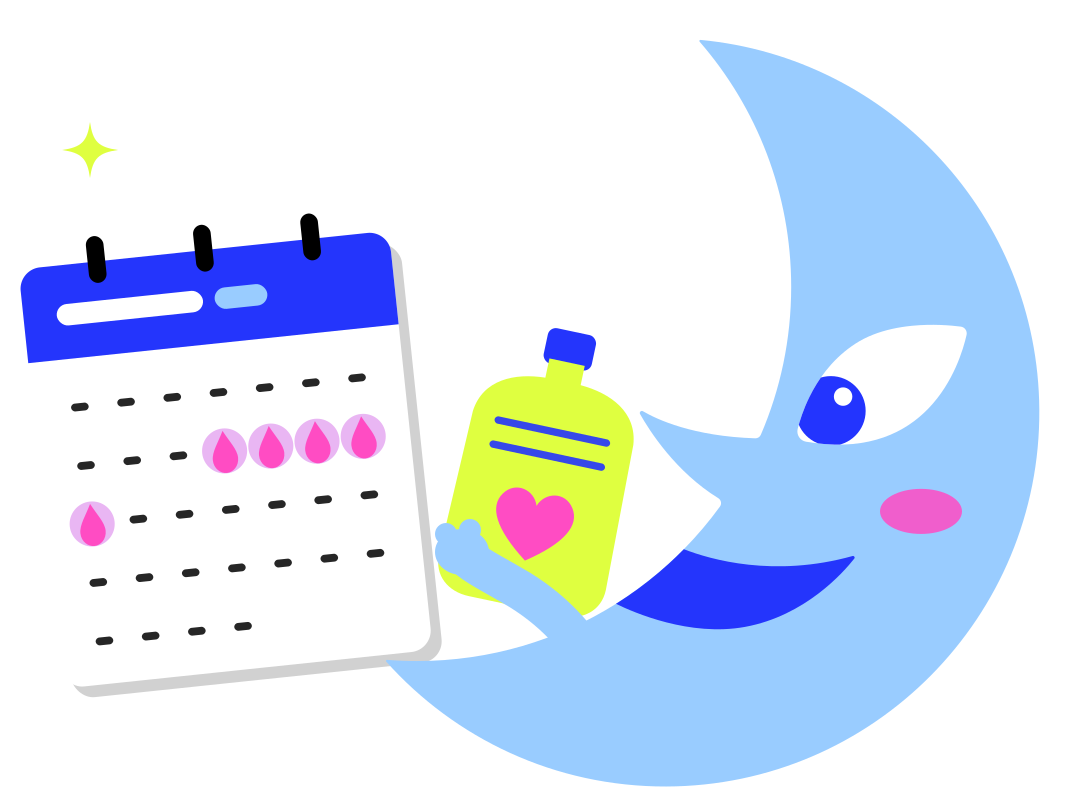
There are lots of apps for tracking your cycle these days. Some people prefer the old way, with an ordinary little calendar.
Doctors ask you to keep track of your menstrual cycle, because everyone needs to know their cycle length and the date of their last period.
It's simple: a regular, normal menstrual cycle is a sign of health and your lifesaver: it helps you spot a pregnancy if it happens, work out how far along it is correctly, and notice if something is off with your body.